A call to action
At the heart of my teaching is a deep reverence for children. Kids are seekers. They’re naturally curious, imaginative, and unafraid to ask the big questions: Where do we come from? Are we alone? Who made God? What was the first seed?
I believe education should honor that wonder. It should stretch thinking, spark curiosity, and nourish imagination. The future of learning isn’t just about keeping up with AI. It’s about staying fully human.
Students don’t just need information. They need tools to wonder, to think critically, to feel deeply, and to trust their intuition. They need adults who model courage, humility, and the ability to sit with mystery.
Below are a sampling of some of my First Grader’s Questions from over the years.
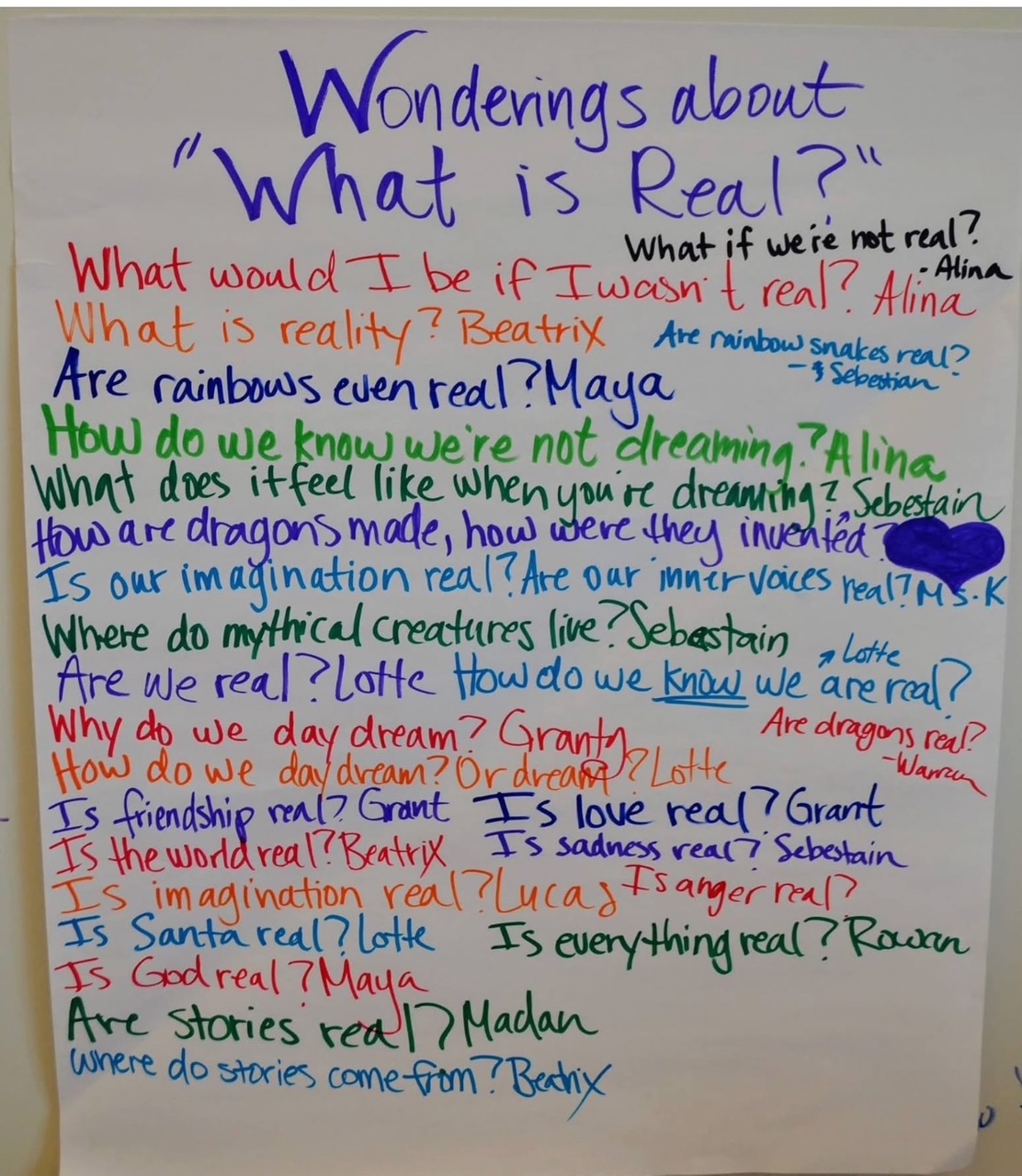
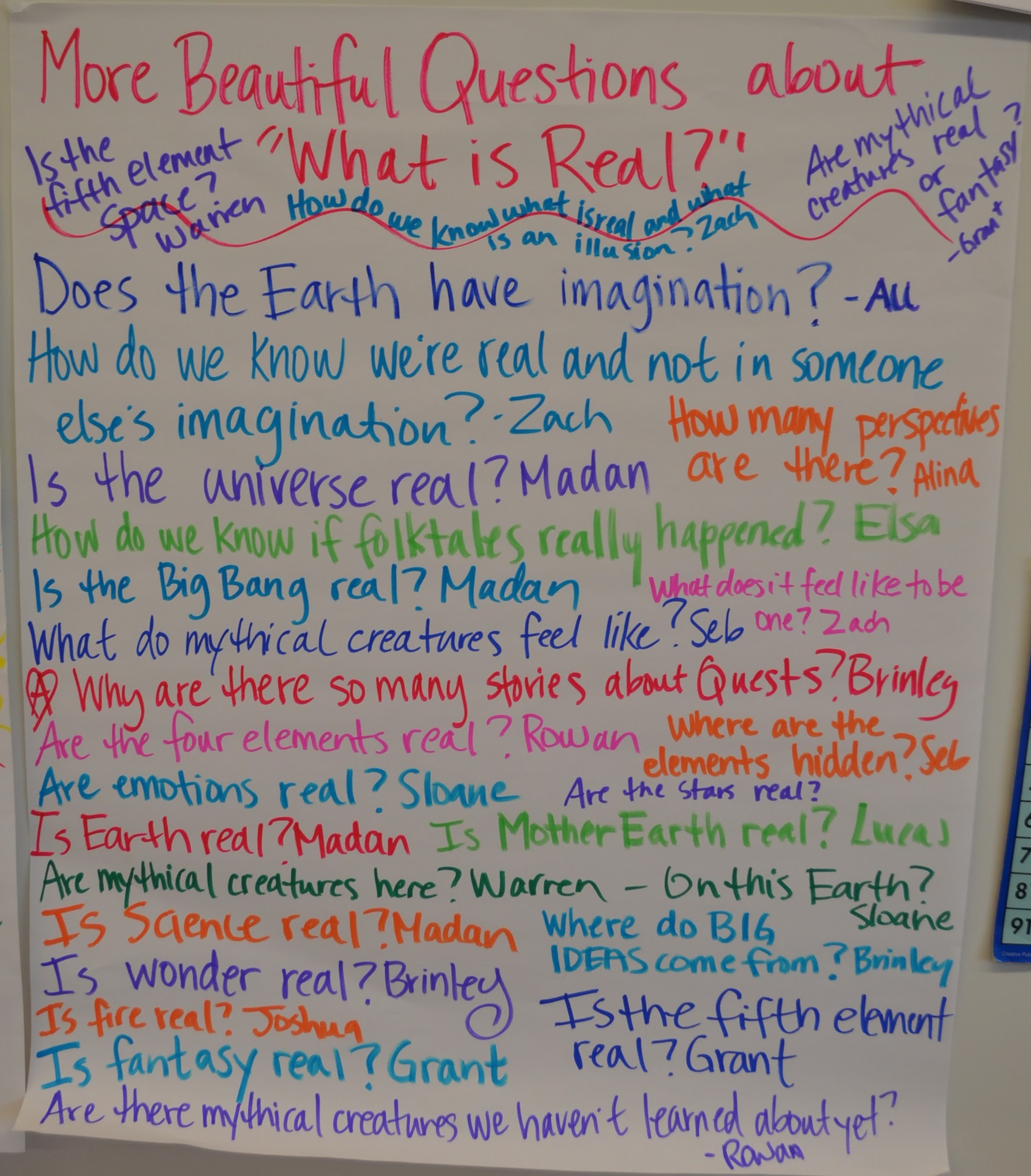
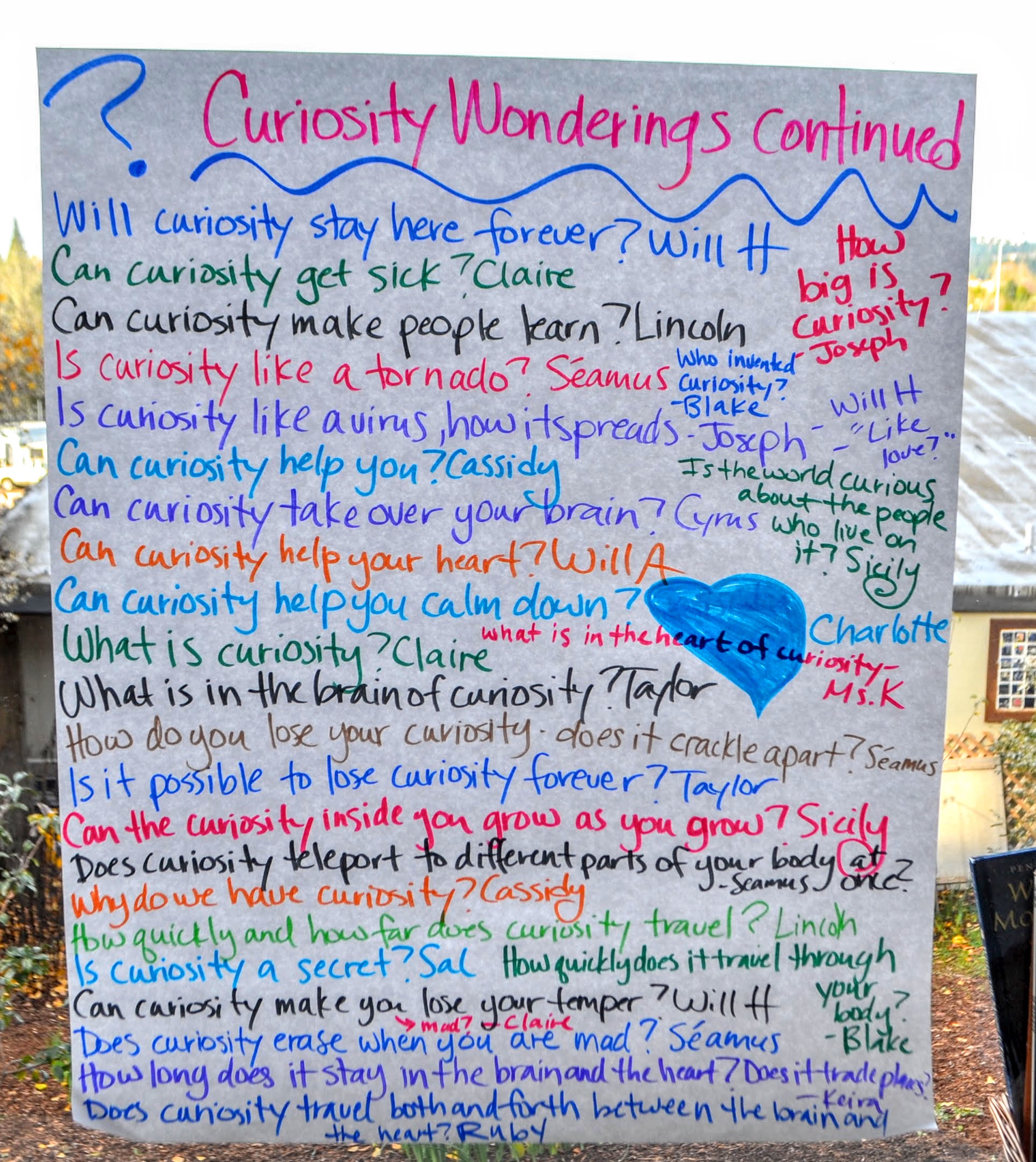
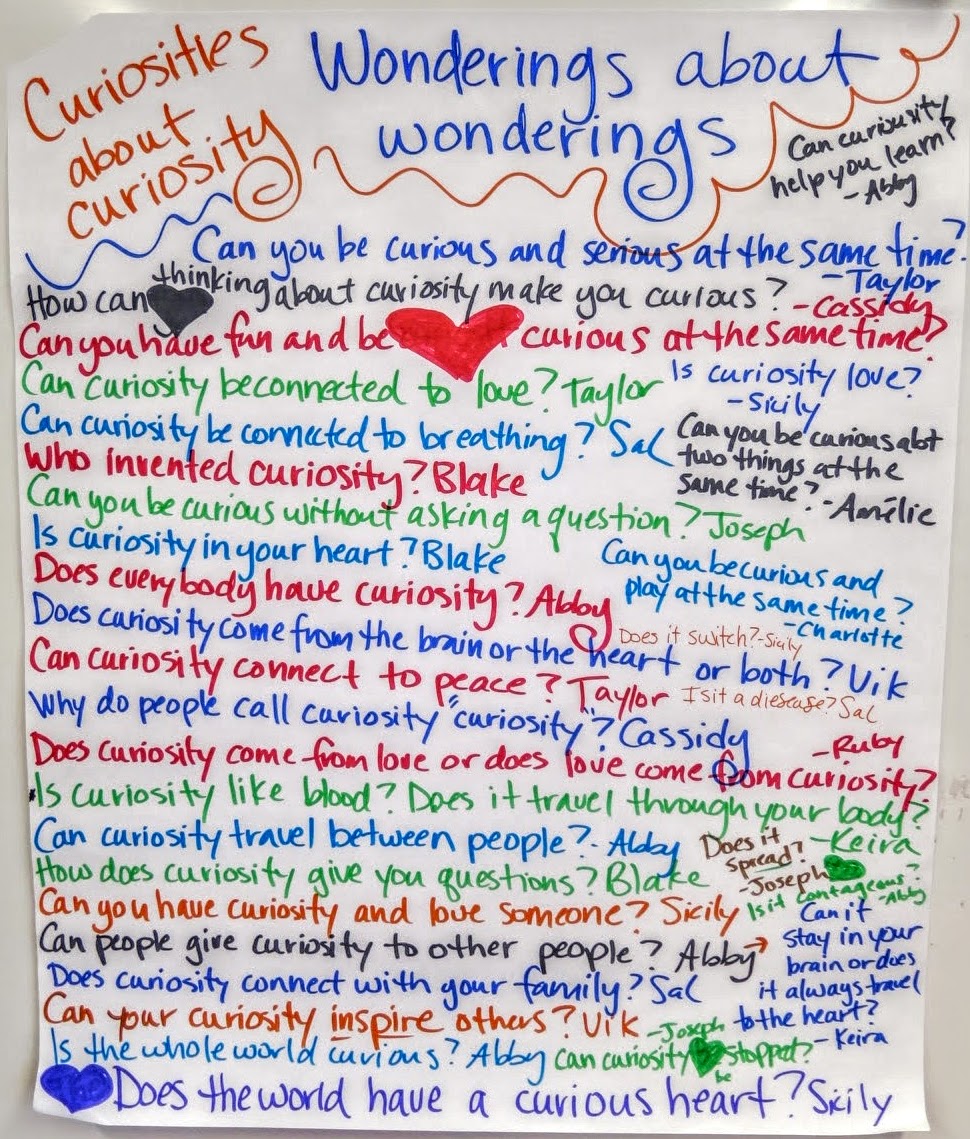
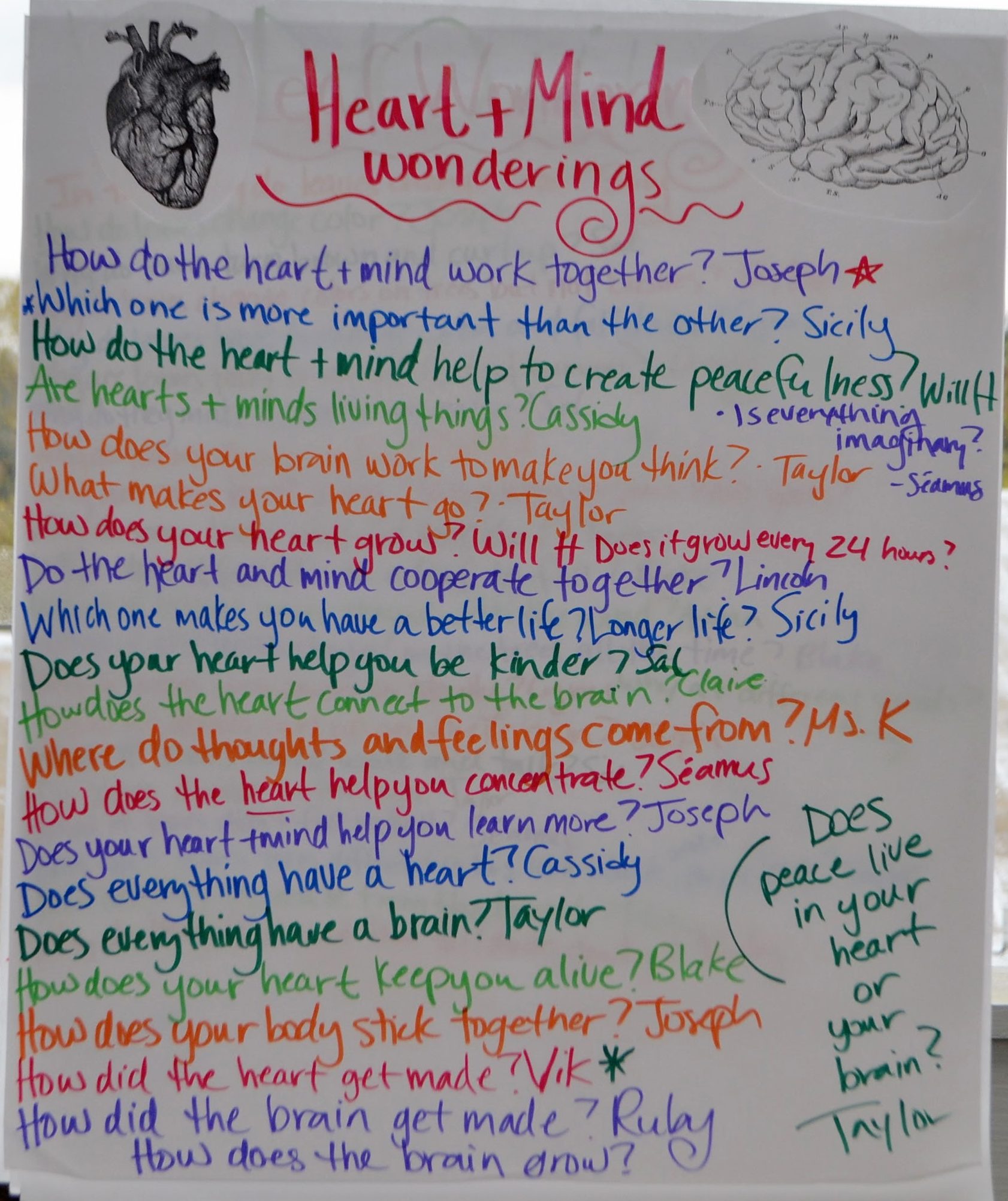
Kids love a real mystery, a real problem to solve. They can smell the authenticity if they know their teachers are curious too. Here’s the truth, curiosity is contagious. Also, if we already know the answers, why ask?
For over twenty years, I’ve taught in public, charter, Reggio-Emilia-inspired, international, and Episcopal schools. The environments have been drastically different, but kids are kids, no matter their socioeconomic background or culture. My philosophy has remained steady. My classrooms center on relational learning through spirited dialogue and communal inquiry. I help students connect the dots between spirituality, social justice, and identity, inviting them to wonder about the world and their place in it. I do not pretend to have all the answers. I stay with the questions, even the uncomfortable ones.
Now I’m creating a sabbatical for myself to integrate and speak a deeper truth.
That word might be unfamiliar. It means I’ve had contact with phenomena that don’t fit into our current scientific frameworks. Maybe you have too. These encounters have been awe-inspiring, disorienting, and absolutely real.
There’s still a heavy stigma around talking about this. But the gig is up. Too many of us have stories.
Jimmy Carter, Ronald Reagan, Barack Obama, Bill Clinton, Harry Reid, Edgar Mitchell, Gordon Cooper, John Lennon, Kurt Russell, Miley Cyrus, Kesha, Demi Lovato, Post Malone, Dan Aykroyd, Muhammad Ali, and Elvis Presley have all publicly stated that they have seen UFOs or believe that UAPs are real.
Chances are, you know at least one sane person who has witnessed something that doesn’t fit within our current models of ‘reality.’
Treat yourself and watch Dan Aykroyd discuss the topic at length.
I’ve got skin in the game and a deep drive to figure out what’s really going on. I don’t need anyone to tell me that something real and mysterious is happening. I’ve seen it with my own eyes. Since 2021, I’ve been down the UFO rabbit hole, pulled in like a moth to a flame. At times, following this topic feels like watching a sci-fi psy-op unfold, where truth, disinformation, and cultural mythologies collide.
This world is strange and murky. CIA operatives, defense insiders, cult leaders, grifters, prophets, talk show hosts, and tech elites all circle the story. Add in black budgets, classified programs, high-level clearances, and emerging weapons systems, and the stakes only get higher. Combine that with deepfakes, AI-generated videos, double agents, and decades of deliberate disinformation, and it gets hard to tell what’s real. Intelligence agencies like the CIA and FBI have played roles in shaping the narrative, sometimes to confuse, sometimes to conceal.
It takes serious critical thinking to cut through the noise.
I used to tell close friends, I keep up with all this so you don’t have to. It takes time to sort out reliable sources. It takes discernment to know what deserves our attention.
Now I want to help people make sense of this strange terrain.
Because this isn’t just about UFOs.
It’s about who or what is behind them.
What intelligence animates the phenomenon?
And what is their relationship to us and to each other? These are the questions that shake the ground beneath science, religion, and reality itself.
where to start?
You don’t have to believe anything.
Just find the thread that sparks your curiosity. This topic touches so many domains—science, history, religion, ethics, philosophy, psychology, art, and technology. Start there. Follow the questions. See where they lead.
Let’s teach students to question paradigms, think critically, weigh all evidence, and stay open to what doesn’t yet fit. Let’s keep everything on the table, not just discard what doesn’t fit our current model of reality. Let’s create classrooms where nothing meaningful is off-limits.
Science and History Are Methods, Not Truths
Science is a process of inquiry. It is about constantly questioning, observing, and evolving our understanding of the world. But for too long, science has been presented as a set of final answers. History, too, has been presented as a fixed narrative, when it should be seen as a living inquiry, constantly open to new facts and new perspectives.
So, how do we teach this? How do we make our classrooms places where questions that challenge established norms are not only allowed, but encouraged?
We start by modeling the scientific mindset in our own teaching, showing students that uncertainty isn’t a flaw but a doorway. A good question is often more powerful than a quick answer. We form hypotheses. We look for patterns. We make connections across disciplines. We analyze data, question results, and stay open to what emerges. That’s real science. That’s the kind of thinking our students need for the world ahead.
We should be digging up primary source materials, scouring old newspapers, listening to testimony, and rolling up our sleeves to piece this mystery together ourselves. Not just taking someone else’s word for it. That’s what historians do. That’s what good thinkers do.
This isn’t about convincing anyone. It’s about making space for honest questions and shared humanity. If disclosure is on the horizon, if the world really is changing, educators have a vital role to play.
We can be guides through awe and uncertainty. We can prepare kids to think deeply, stay grounded, and meet the unknown with presence.
With the upcoming release of The Age of Disclosure film, this conversation may really move into the mainstream. Let’s make sure education isn’t left behind.
Next steps: Follow your curiosity. See what sparks.
 wonderstanding