Stigma is the social risk of sharing experiences that fall outside accepted norms.
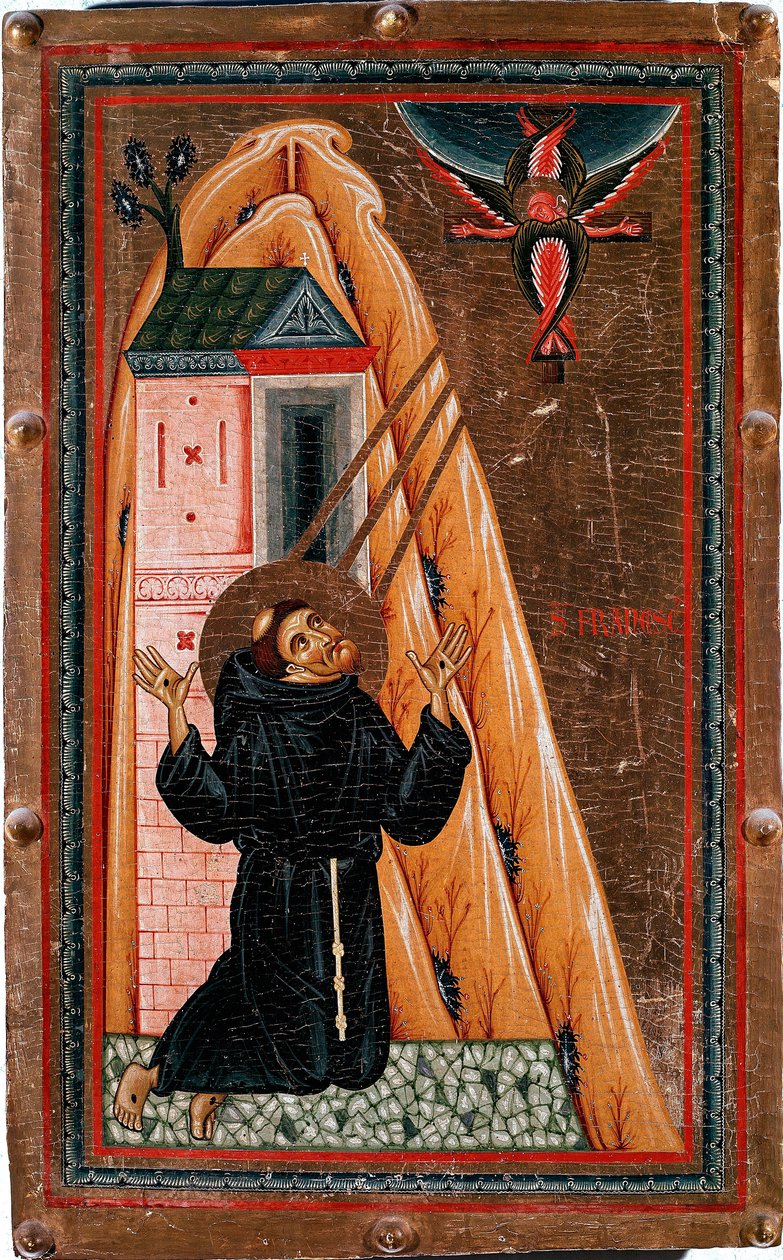
The word stigma comes from the Greek for “mark” or “brand,” a visible sign of disgrace. In religious history, it’s tied to the phenomenon of stigmata—wounds that mysteriously appear on the body, mirroring the crucifixion wounds of Christ. The most well-known account comes from Saint Francis of Assisi, who received these marks after a visionary encounter with a seraphim. This angelic being was not soft or humanlike. It was fiery, with six wings and a piercing presence, described in ways that align more with awe and terror than comfort.
His vision set him apart. The wounds became a sign of the sacred, but also brought suspicion, fear, and ridicule. His experience was both holy and haunting. To be marked by the divine often means becoming strange to the world.
To be marked by the divine often means becoming strange to the world.
This pattern continues today. Those who report contact with non-human intelligences, visionary dreams, or near-death experiences often carry an invisible stigma. They may not bleed from their hands and feet, but they are set apart. Their stories challenge what is considered possible. They disrupt the shared agreement of what is real.
These modern experiencers often find themselves in the same liminal space as the mystics of the past. They are seekers, messengers, and sometimes outcasts. Their encounters can be deeply meaningful, even transformative, but they are also isolating. Sharing what really happened may bring rejection or humiliation. Holding it in feels like denying your own truth.
The stigma is not just about disbelief. It is about the discomfort of mystery.
We live in a culture that prefers certainty. We are taught to explain, categorize, and contain. But the experiences that fall outside that system do not disappear. They live in the body, in the psyche, in the stories we are afraid to tell out loud.
If we take these stories seriously, not as proof, but as data of the soul, we might begin to see that the mark is not a wound to hide, but a message to listen to. What if those who carry the mark are not broken or deluded, but paying attention to something the rest of us have forgotten how to see?
That dynamic has not changed much. In modern times, people who speak about UAPs, spiritual awakenings, altered states of consciousness, or other anomalous events still risk being labeled unstable or unprofessional.
This stigma has real consequences. Military pilots and submarine commanders often hesitate to report unexplained phenomena for fear of losing their careers. Scientists who investigate these subjects seriously have faced professional backlash and loss of funding. For example, Dr. J. Allen Hynek, once a skeptic, became an advocate for serious study of UFOs but endured years of criticism. Dr. Jacques Vallée faced skepticism despite his credentials as a respected computer scientist and ufologist. Even whistleblowers like Captain David Fravor, who reported the famous 2004 Tic Tac UAP encounter, faced doubts and silence.
Programs such as Project Grudge and Project Blue Book were created partly to downplay sightings and discredit witnesses. Media mockery and academic gatekeeping reinforced the message: if your experience does not fit the dominant narrative, keep quiet.
But things are changing. More and more people are coming forward, realizing they are not alone. The stigma is beginning to crack, making space for new stories, new sciences, and new ways of knowing.
As educators and explorers of human experience, we can help create spaces where people are no longer silenced by fear. It is time to step beyond the stigma and into a broader, more courageous conversation about what it means to be human.
 wonderstanding