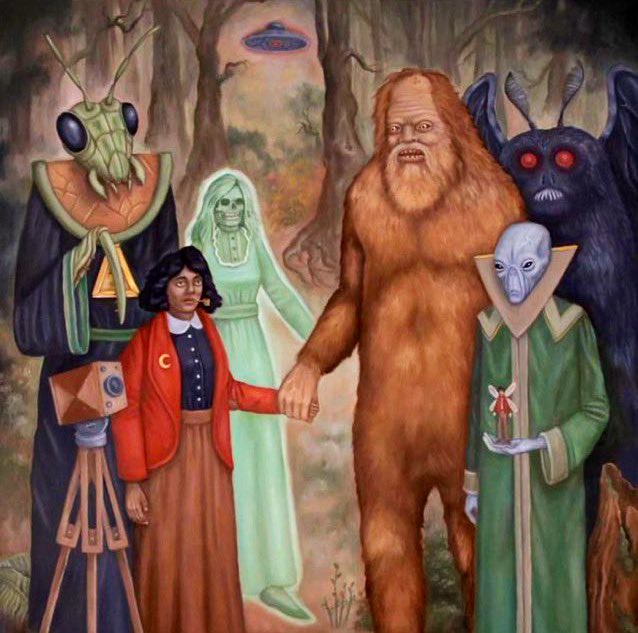
The word “alien” has long been the catch-all label for anything nonhuman, strange, or out of place. From cartoons and tabloids to sci-fi blockbusters, we’ve been raised on stories of little green men and flying saucers. These pop culture images have shaped public thinking for decades, fueling both fascination and ridicule.
The most familiar explanation, called the extraterrestrial hypothesis (ETH), says these beings come from other planets. But many researchers now see ETH as the least interesting option. Some even wonder if it was a distraction all along.
What if they’ve been here all along? What if they’re not from “out there” but from here, living alongside us, or before us, in ways we haven’t yet understood? With increasing government transparency and congressional hearings on UAPs, more scientists, scholars, and intelligence insiders are turning to deeper questions. They’re exploring other possibilities, ones more complex, weirder, and harder to dismiss.
Here are a few of the leading alternative hypotheses:
- Ultraterrestrials: Beings that have always existed on Earth or nearby but are normally undetectable to us. This idea suggests they might exist in forms or frequencies we cannot perceive.
- Interdimensional Beings: Lifeforms from other dimensions or realities that occasionally overlap with ours.
- Future Humans: Some theorists believe UAPs and their occupants could be advanced versions of ourselves, traveling back in time.
- Cryptoterrestrials: Intelligent species that evolved here on Earth but remain hidden, possibly underground, underwater, or in isolated ecosystems.
- Consciousness-Based or Spiritual Entities: Some experiences point to non-physical intelligences that interact through the mind, dreams, or altered states of awareness rather than through material craft.
Even in official circles, people are beginning to acknowledge that the term “alien” may be too narrow. It suggests something foreign or external, when in truth, we do not really know what we are dealing with yet.
In fact, during recent U.S. congressional briefings and public hearings, witnesses mentioned different reported a multiplicity of different “species” types of beings. He named four distinct classifications of beings. These categories reflect reports that have been shared around the world for decades.
Ultimately, the word “alien” is just a placeholder. It stands in for something unknown, something we do not yet have language for. That opens the door to curiosity, new frameworks, and a willingness to rethink what we thought we knew.
If you have read this far, you may be curious to know that another, even more peculiar word has recently been dropped by a whistleblower, “Biologics.”
 wonderstanding